
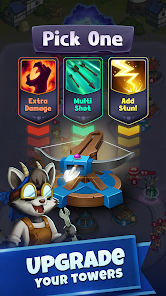
Mobile tower defense games work best when the player can understand a threat quickly, make a meaningful placement decision, and see the result without confusion. Tower Rush aims for that compact loop: enemies advance, towers respond, and each round asks the player to refine priorities rather than simply watch numbers rise.
Gameplay Overview
The main appeal of Tower Rush is its direct strategy structure. Players read incoming waves, place or improve defensive tools, and adjust to pressure as the match develops. The design appears built for short sessions, which suits mobile play, but it still benefits from careful attention to enemy routes and upgrade timing.
Progression is strongest when it gives players enough information to compare choices. A new tower, a stronger attack pattern, or a more efficient defensive sequence matters most when the interface makes the tradeoff clear. Tower Rush generally fits that genre expectation, presenting a loop that is easy to understand but still asks for planning.
Visual Style
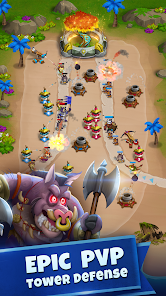
The visual direction favors readable mobile strategy cues: clear routes, distinct defensive points, and interface elements that need to communicate status at a glance. For a game in this category, clarity is more important than visual density. The strongest moments come when the screen helps the player understand what happened and why.
A limitation common to compact defense games is that repeated encounters can begin to feel visually familiar unless enemy types, map shapes, or upgrade effects keep changing the rhythm. Tower Rush depends on how well those details scale across later sessions.
Tips for Beginners
- Watch the route before committing all resources to one defensive point.
- Upgrade with a purpose: improving one strong position can be better than spreading power too thin.
- Pay attention to enemy behavior and adjust tower placement when a wave exposes a weak lane.
- Use early rounds to learn timing instead of rushing into complex upgrade paths.
What Makes It Interesting
Tower Rush is interesting because its appeal comes from small, repeated tactical judgments. It does not need a complicated premise to work; it needs visible cause and effect. When a placement choice changes the outcome of a wave, the game delivers the clean feedback loop that keeps tower defense engaging.
Pros
- Accessible tower defense structure for short mobile sessions.
- Clear emphasis on wave management and placement decisions.
- Progression can support experimentation when upgrades are readable.
Cons
- Long-term variety depends heavily on map and enemy diversity.
- Small-screen clarity can become challenging during crowded moments.
- Players looking for deep narrative context may find the focus narrow.
Overall Summary
Tower Rush presents a familiar but serviceable mobile tower defense structure. Its best qualities are clarity, quick tactical feedback, and a progression loop that can support thoughtful placement. Its limitations are mostly tied to variety and the need for consistently readable encounters across longer play. For players interested in compact defense strategy, it is worth understanding on those terms.
Reference: Official page on Google Play.